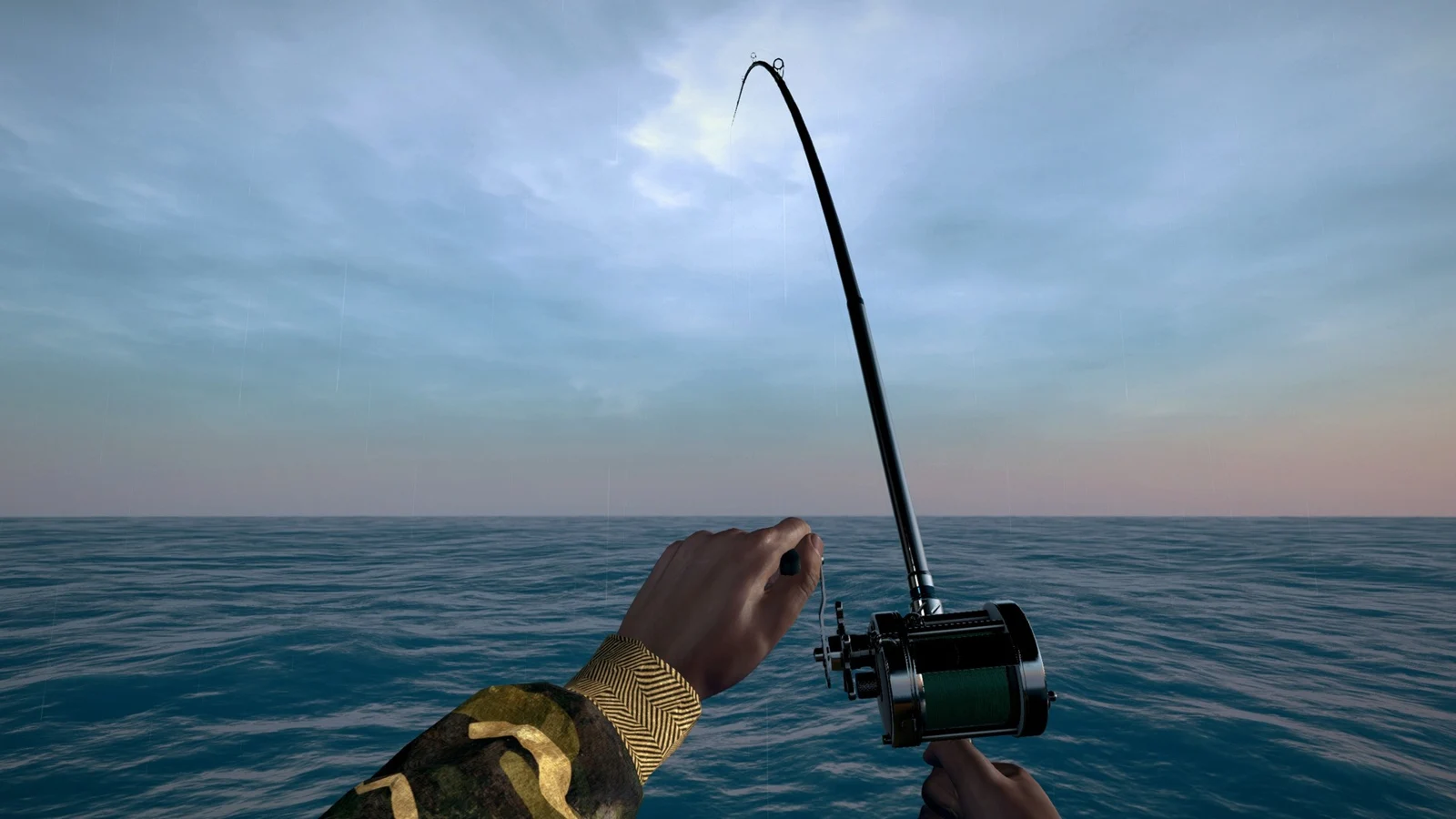
A clue begins an observation
Ultimate Fishing Simulator's official fly-fishing description suggests looking for rings on the water when locating fish. This gives a beginner something concrete to notice before casting. Instead of selecting a place entirely from the scenery, look for activity that relates to the method you intend to use. Then consider whether the bank provides a comfortable way to present towards that area.
The ring is a starting clue, not a complete answer. It does not tell you every detail of the equipment, the next action or the eventual result. Keep your expectation modest enough that the clue remains useful. An observation becomes less informative when it is immediately converted into a promise about what the next cast must deliver.
Connect the clue with your position
Look at the activity and then at the place where you are standing. Can you see the intended landing area clearly? Does the angle let you follow the action afterwards? A small move along the bank may make the relationship more understandable without requiring a different fishery or a new set of equipment.
Avoid treating the first visible cue as a command to cast immediately. A brief pause to find a usable position can make several later attempts easier to compare. You are organising the observation around something repeatable: the same general area, a stable setup and a presentation whose path you can follow. That is a stronger basis for learning than a hurried throw from whichever angle happened to reveal the ring.
Keep seeing and explaining separate
After the cast, record what you could actually observe. Perhaps the presentation landed short of the intended area, the cue appeared elsewhere or the action became difficult to follow. Those details lead to practical adjustments. A broad explanation such as the fish disliked the fly may sound satisfying while leaving the more immediate casting problem unnoticed.
The same care applies when a catch follows. You can enjoy the result and record its context without claiming that the visible ring established a guaranteed hotspot. A clue helped focus the attempt; the encounter still belongs to the game situation that unfolded. Keeping that distinction makes the notebook more useful to a beginner who will return under a different set of circumstances.
Let a quiet surface still be part of the walk
A river visit need not become empty time when the particular cue is not obvious. Use the walk to compare accessible banks, practise a manageable cast or read the equipment information more carefully. These are useful parts of learning the method even when they do not produce an immediate target.
End with a location description and a question you can revisit. You might want a clearer angle on the same area or another attempt with the familiar setup. Keep the note based on what you saw rather than what you wish the cue had proved. Over several visits, the river becomes a set of understandable relationships between view, position and presentation, while the surface remains something to notice rather than a set of promises to collect.
A visible cue can be worth recording even when you decide not to cast at it. The bank may be awkward or the current setup unfamiliar. Mark the reason for postponing the attempt; that creates a clear future exercise without forcing every observation into an immediate action.