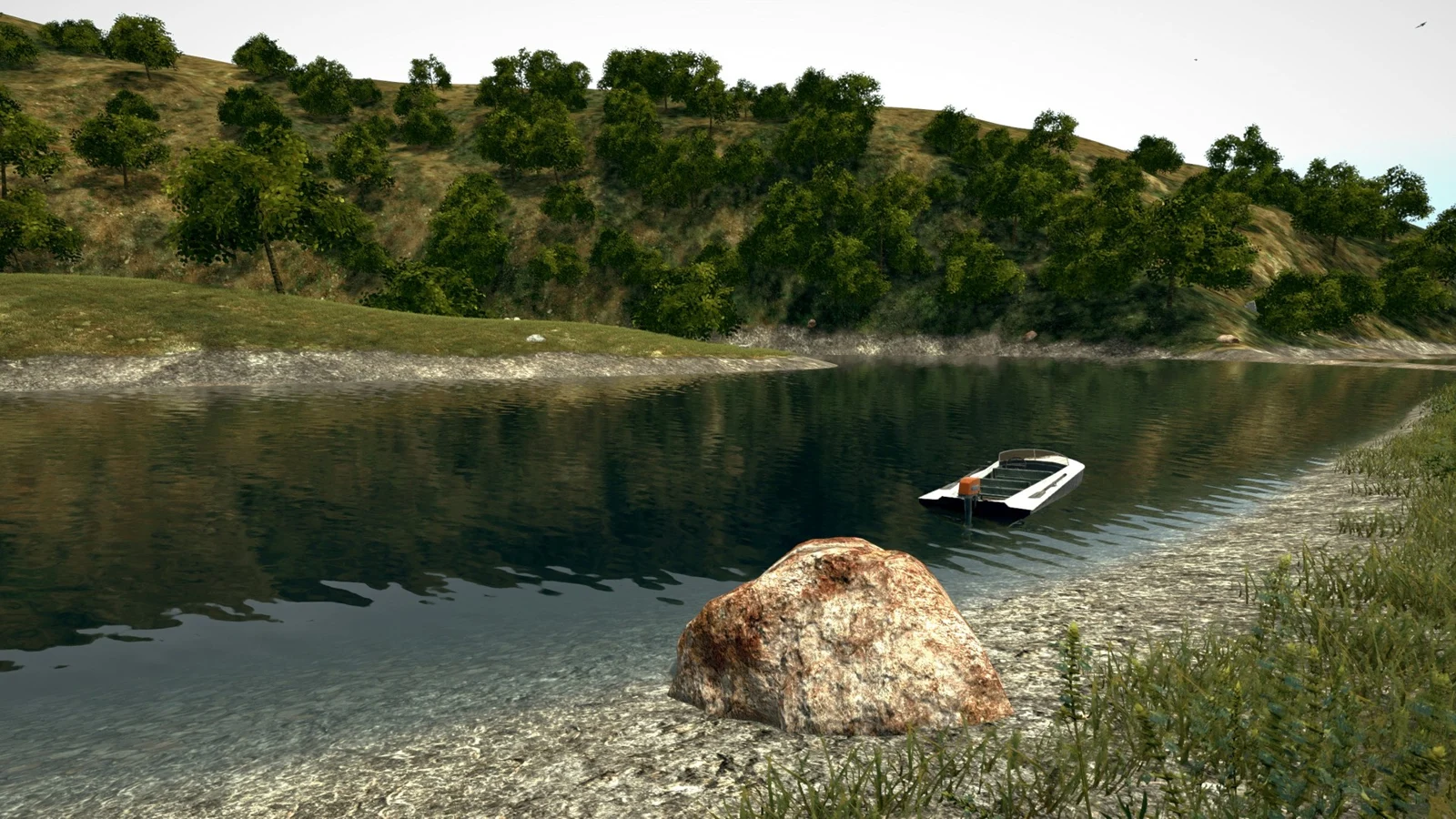
Begin with a walkable scale
Choose a section of water small enough that you can understand the outing before it expands. One accessible bank, a nearby alternative angle and a place to finish can be enough for a river evening. The route does not need to cover the whole fishery to feel like exploration. Its value comes from noticing relationships you can revisit.
Look for practical differences between the pauses. One may offer a clearer view of surface activity, another a more comfortable casting position and a third a pleasant place to stop and review the setup. These are reasons for comparison rather than claims about hidden fish concentrations. A route built around observable qualities stays useful even when the next catch differs from the previous visit.
Use the first pause to look
At the beginning, spend time with the scene before changing equipment. Notice the accessible edge, the part of the water you can follow clearly and any visible cue that gives the presentation a purpose. Check the setup you intend to use and keep it stable for the first attempt. This makes the river itself the subject of the opening observation.
Write the reason you chose the position in a sentence. Clear view towards surface activity is a more actionable note than beautiful place, even if both are true. The first describes how the position supports play; the second records why you enjoyed being there. Keeping both gives the journal a practical use without draining the atmosphere from it.
Use the second pause to compare
Move to the nearby alternative with a specific question. You might want to see whether a different angle makes the presentation easier to follow or whether the standing space improves the cast. Leave the equipment familiar while considering that difference. If you change every part of the attempt, the second pause becomes another beginning rather than a meaningful comparison.
Keep the conclusion proportional to what you observed. A more comfortable angle is a useful discovery in its own right. It does not establish that the position guarantees more fish. The notebook can describe a personal working route without turning it into a universal instruction for everybody who visits the same virtual water.
Use the last pause to choose the return
Before ending the outing, review the most useful observation and select one next step. Perhaps you want another visit with the same fly, or a separate comparison of compatible fly categories from the clearer position. A narrow continuation gives the next evening direction without requiring a large plan or another long shopping list.
Let the route remain flexible. Another visit may reveal a view or an accessible bank that deserves attention, and you can adapt the walk without pretending the original sequence was a rule. The point of three pauses is to give learning a gentle rhythm: notice, try, compare and leave with something understandable. The river can keep its sense of discovery while the method gradually becomes familiar.
Leave room for a short visit that repeats only the first pause. A familiar view and a manageable action can be enough when the evening is brief. The route is there to support a rhythm you enjoy, not to require the same complete circuit every time.