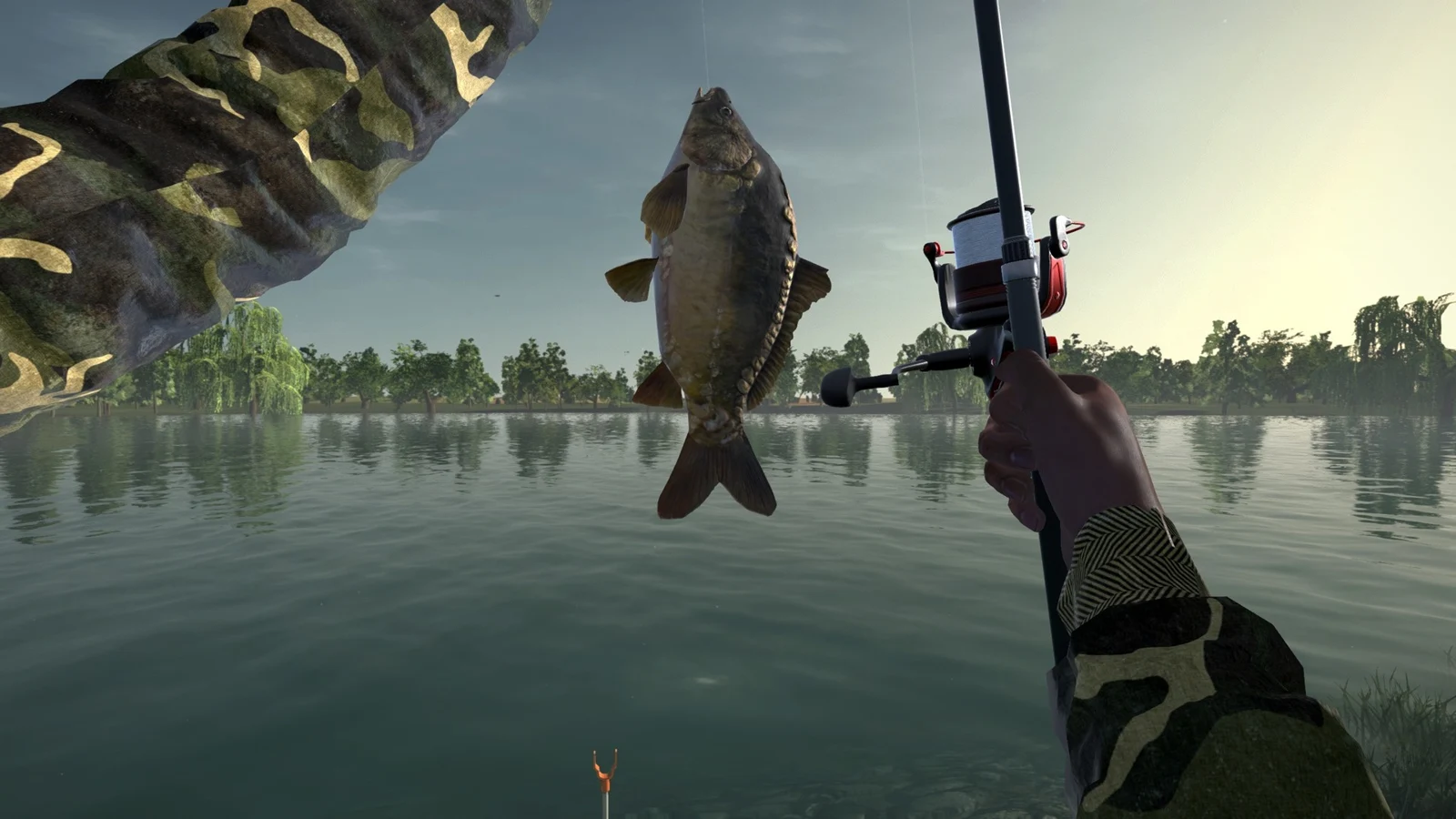
Choose the right game and the right method
Ultimate Fishing Simulator explicitly includes fly fishing among its techniques. That is the starting point for this journal: a supported in-game presentation, rather than ordinary spinning renamed to suit a river aesthetic. Open the equipment information for your installed version and identify the pieces the fly setup requires. Begin with an arrangement you can assemble and understand before treating every attractive item in the catalogue as necessary.
Keep the first aim modest. You want to recognise the controls, make a useful cast and observe what follows. A distant fishery or a complicated collection goal can wait until those actions are comfortable. Learning a method is easier when the equipment and location remain familiar long enough for the presentation itself to become the interesting question.
Find a position with room to observe
Choose an accessible bank and look at the water before casting. You need a view that lets you understand the landing area and the action afterwards. A picturesque position can be worth visiting even if another nearby angle is easier for practice. Separate the place you want to photograph from the place where you can most comfortably follow the presentation.
The official game description draws attention to rings at the surface as a clue when looking for fish. Use that cue to select an area worth observing, not as proof that the next cast must succeed. Spend a little time seeing where the activity appears and how your standing position relates to it. That gives the first cast a purpose beyond simply reaching the maximum distance.
Make one action repeatable
Follow the controls shown by the game for the equipment and input device you are using. Do not import a physical casting routine from a real-world tutorial and assume every movement has a direct simulated equivalent. The useful first exercise is an in-game action you can repeat: a clear target area, an understandable cast and enough attention to observe the result.
If the attempt is awkward, change one relevant thing. You might improve the viewing angle, reread an equipment requirement or simplify the target area. Avoid changing the entire setup after every uncertain interaction. A stable arrangement lets you notice which small adjustment actually helped, and it prevents the opening session from turning into a sequence of purchases without a clear explanation.
Leave with a useful beginning
A first outing can end well when you understand a little more than you did at the start. Record the setup, the area you chose and the action you managed to repeat. Keep the game's equipment information distinct from your own observation. A catch can be memorable without proving that every detail of the arrangement was necessary for it.
Choose one next question rather than a list of everything still unfamiliar. You might want to compare another fly category, revisit a nearby surface cue or repeat the same cast with better control. That small continuation gives the next session a clear opening. Fly fishing in a virtual world can then become a gentle process of noticing and learning, with the river scene remaining part of the experience instead of a stage for hurried completion.
Before the next visit, read the small note once and check that you can act on it. If it asks you to change several unrelated things, select the clearest question. One understood improvement gives the method a firmer beginning than a broad ambition to master every part of it.